Marble or sintered stone: which is better for a dining table?
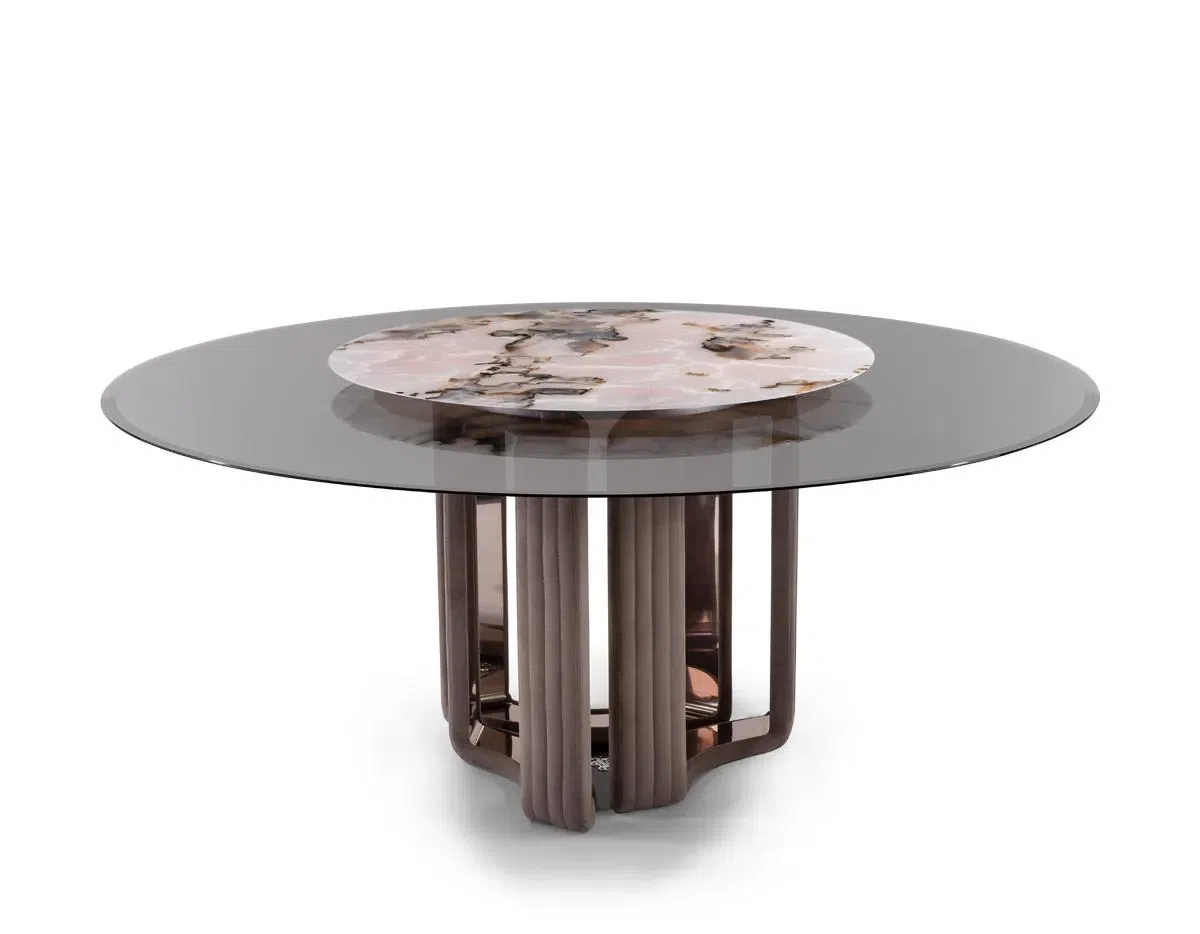
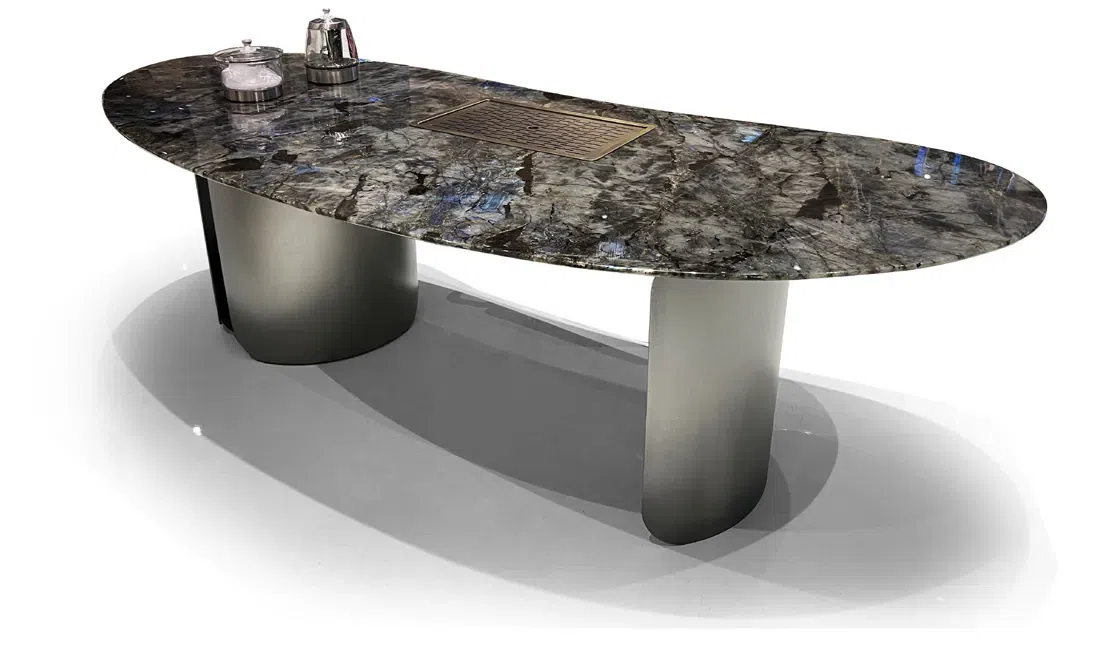
Choose marble for a dining table when natural veining and a stone that ages with use matter most, and the table will be cared for in a home. Choose sintered stone when the table faces heavy daily use, spills and cleaning, or when several matching tables are needed for one project. Both suit the same bases: every table in the Pofung Stone & Metal dining table collection can be ordered with either a marble or a sintered stone top, cut to a size within the range its base supports.
1. What each material is
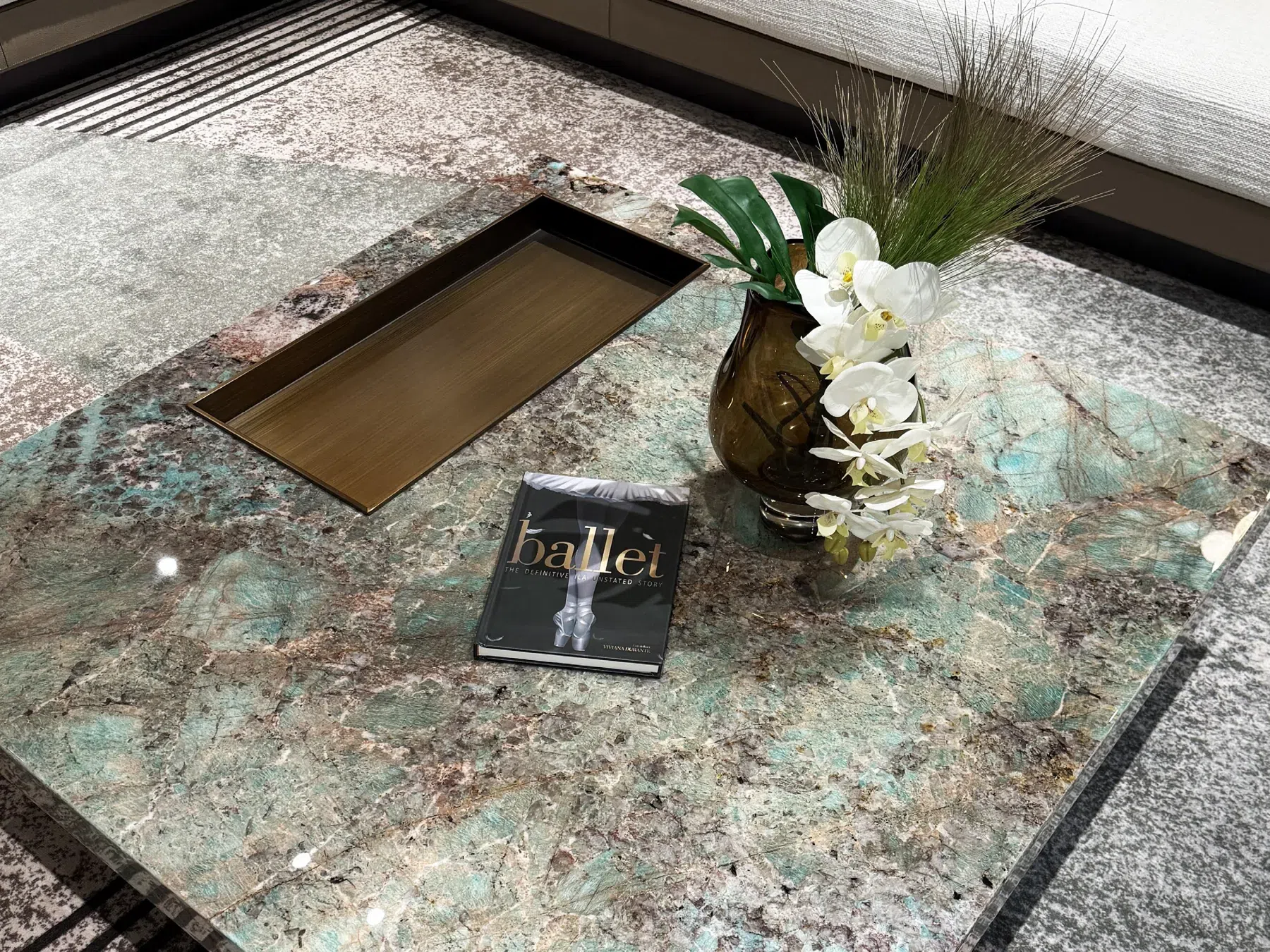
Marble is a natural stone quarried in blocks and cut into slabs. Its colour and veining come from the rock itself, so no two slabs are identical, and the pattern runs through the full thickness of the stone.
Sintered stone is an engineered surface made from natural minerals that are pressed under very high pressure and fired at high temperature. The result is a dense slab with very low porosity. Its pattern is designed and reproduced, so slabs from the same batch look consistent. On many sintered stone slabs the pattern sits mainly on the surface, which matters when you choose an edge profile.
2. Stains, heat and scratches
Daily use is where the two materials differ most.
- Acids and stains. Marble is sensitive to acidic food and drink such as lemon juice, wine and vinegar, which can leave dull marks known as etching. It is also porous, so it needs sealing and prompt cleaning to resist stains. Sintered stone has very low porosity and is far less affected by everyday spills.
- Heat. Sintered stone is fired during manufacture and tolerates heat well. Marble also copes with warm dishes, but using trivets for hot pans is sensible for both.
- Scratches and chips. Sintered stone is very hard and resists scratching. Marble is softer and can scratch, though it can be repolished. Both can chip if a heavy object strikes an edge, so a rounded or eased edge profile is worth considering for busy settings.
3. Appearance and matching across a project
Marble's variation is its appeal: a dramatic slab can make one table the centre of a room. The same variation makes exact matching difficult. If a restaurant or hotel needs twenty tables that look alike, sintered stone offers more predictable results, because the pattern is reproduced from slab to slab.
For a single statement table, ask for photographs of the actual slab before cutting. For multiple tables, ask how the supplier will allocate slabs and whether tops will come from the same batch.
4. Size, edges and weight
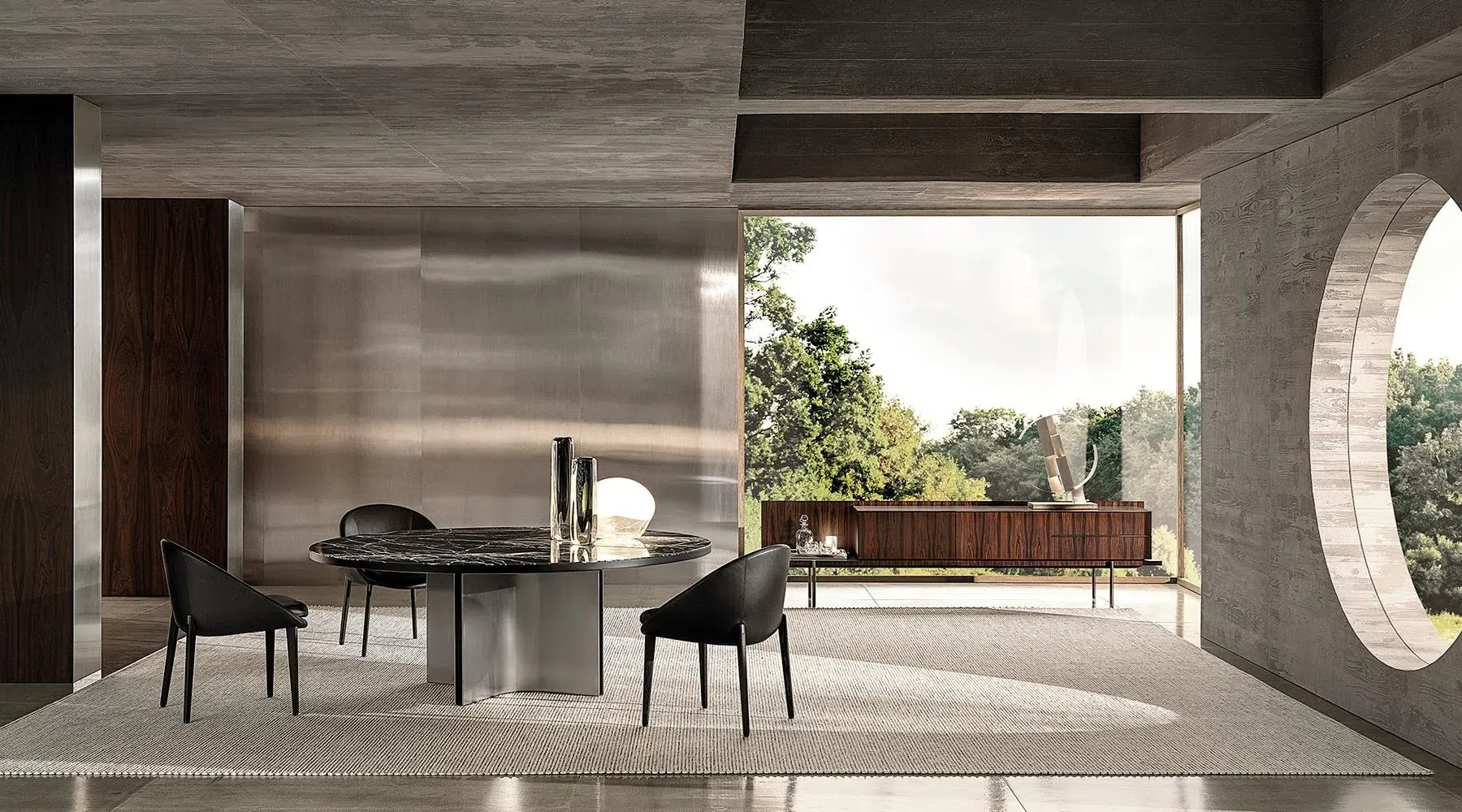
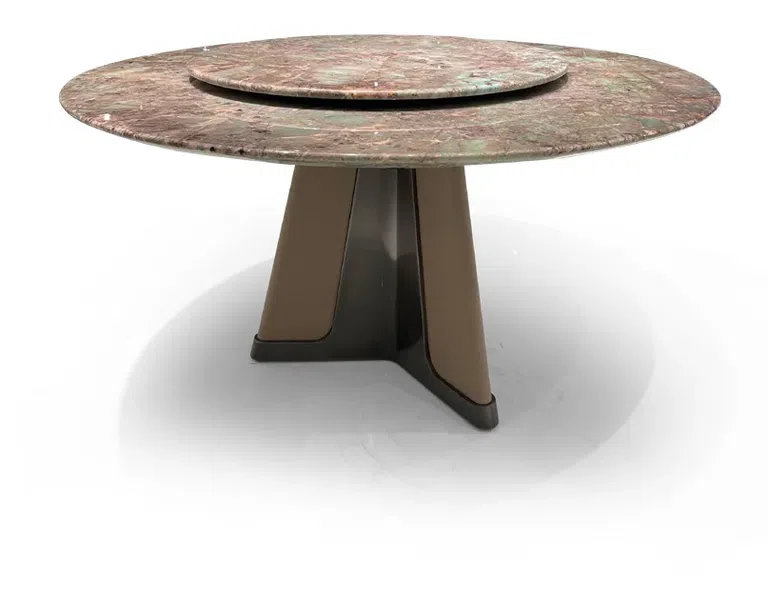
Stone tops are cut to order, so size is usually flexible within the range the base can carry. Pofung lists that range for each model. The Y-024 round dining table takes a top from Ø135 to Ø150 cm, while the C-059 dining table takes a rectangular top from 160 to 200 cm long. Choose the exact size within that range to suit the room and the number of seats.
Two further points to confirm with your supplier:
- Edge profile. With marble, the veining continues around any edge. With sintered stone, ask how the edge will look: a mitred edge can carry the surface pattern round the corner, while a simple cut edge may show a different colour from the face.
- Weight and handling. A large stone top is heavy. Check the delivery route, lift access and the number of people needed for installation, especially for tops over two metres.
5. Which to choose for homes, restaurants and hotels
| Setting | Usually better | Why |
|---|---|---|
| Family home, single feature table | Marble | Unique veining; owners can seal and care for it |
| Home with young children or daily heavy use | Sintered stone | Resists stains, etching and scratches |
| Restaurant or café | Sintered stone | Frequent cleaning, spills and consistent appearance |
| Hotel suites or serviced apartments | Sintered stone | Many matching tables, low maintenance |
| Villa or show home where the table is a centrepiece | Marble | A selected slab becomes a design feature |
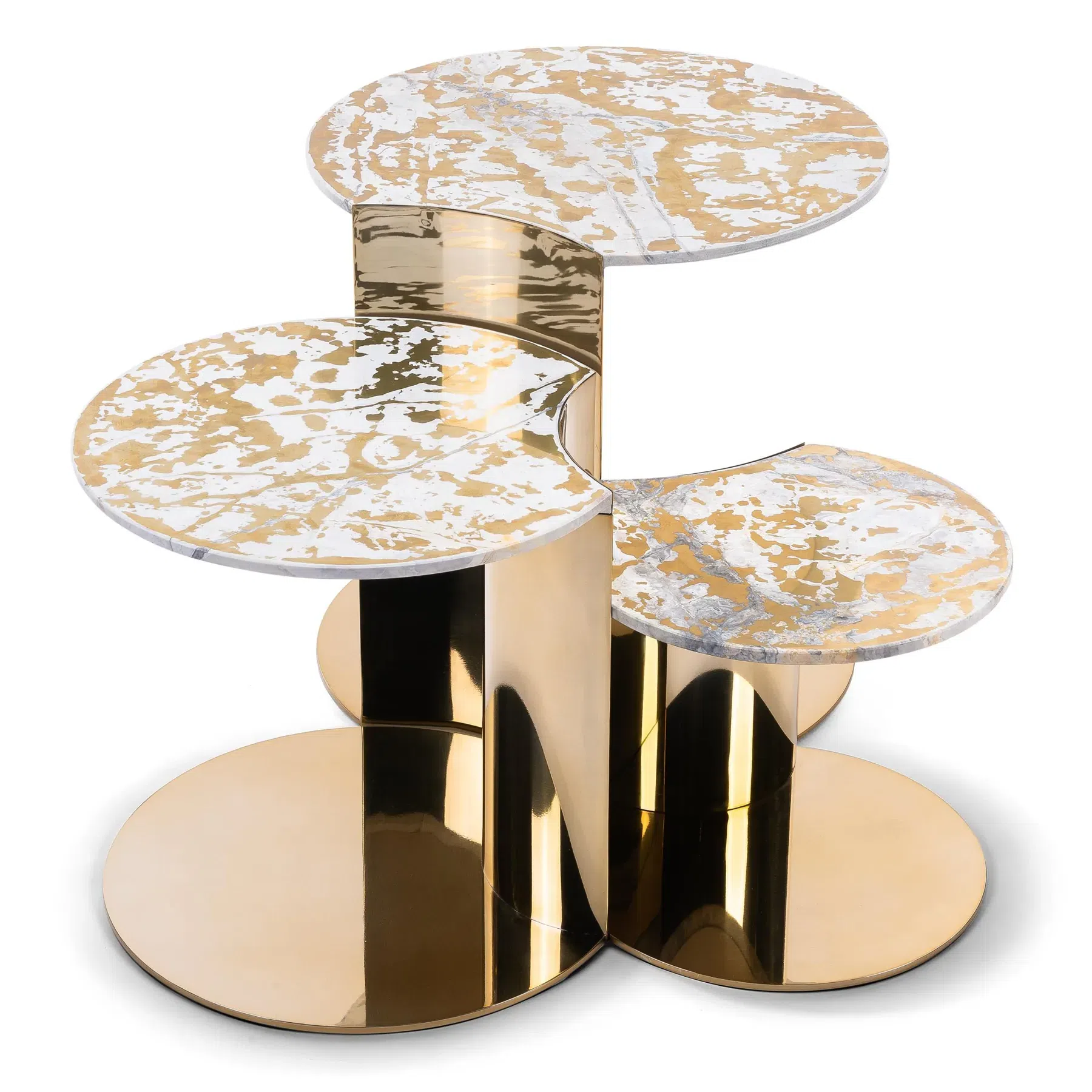
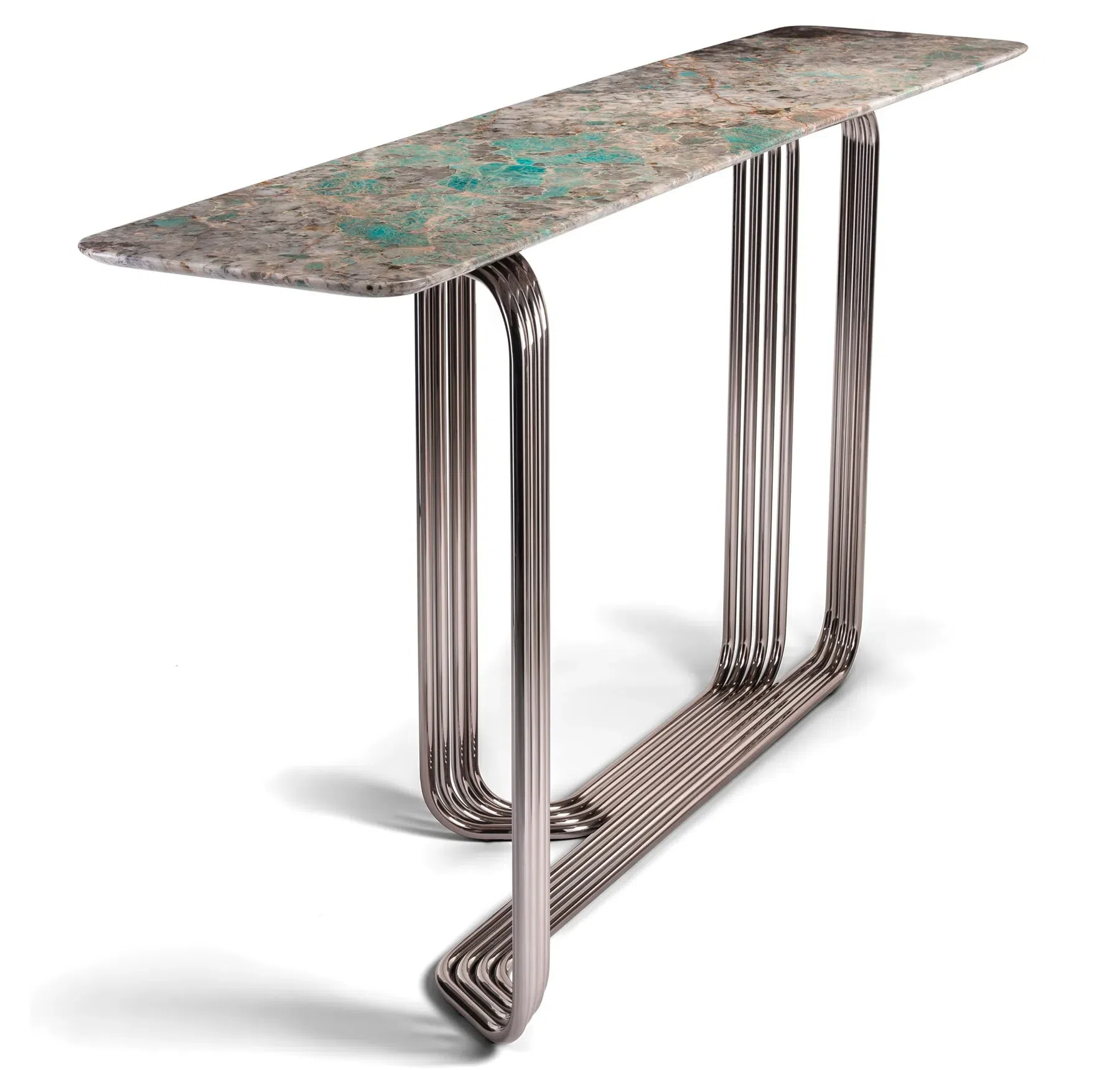
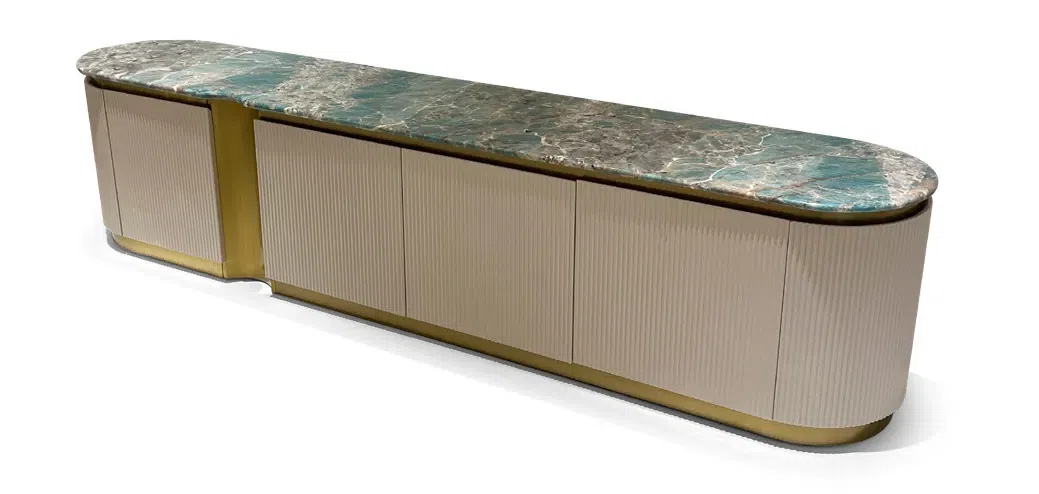
The same reasoning applies to stone coffee tables and side tables and stone console tables. A console in an entrance hall sees little wear and can show off marble, while a coffee table in a busy family room may be better in sintered stone.
6. What to ask your supplier before ordering
- Which marble and sintered stone options are available for this base, and can I see samples?
- What top size range does the base support, and what size do you recommend for my seating plan?
- Which edge profiles are available, and how will the edge look on sintered stone?
- For marble, can you send photographs of the slab that will be cut, and is the top sealed before shipping?
- For several tables, will all tops come from the same batch?
- How will the top be packed and protected in transit?
Choose your stone dining table
Browse the marble and sintered stone dining tables from Pofung Furniture, then send us the model, your preferred top size and material, the quantity and your delivery city. Orders start from one piece, with production taking approximately 30 days. If you are unsure which stone suits your project, ask our team for samples of both.